2026 California Gubernatorial Election: Tom Steyer’s $27 Million War Chest Redefines the Race

Executive Insights
- Tom Steyer has spent over $27 million by February 2026, vastly outspending all other candidates combined.
- The massive ad blitz is designed to overcome Steyer’s lower initial name recognition compared to rivals like Katie Porter and Antonio Villaraigosa.
- Steyer is self-funding his campaign and running on a platform of ‘Affordability’ and a ban on corporate PAC contributions.
- The fragmented Democratic field and the top-two primary system create a risk that established candidates could be shut out of the general election.
- Republican candidate Steve Hilton is the second-highest spender but trails Steyer by over $20 million.
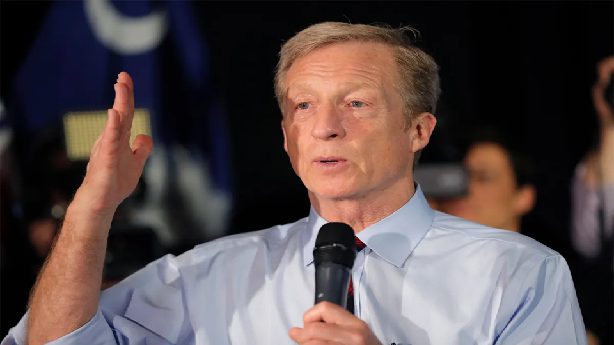
As of February 4, 2026, the race to succeed Gavin Newsom has entered a volatile new phase, defined almost entirely by a singular financial force: billionaire Tom Steyer. In a contest that was expected to be a traditional slugfest between seasoned Democratic heavyweights, Steyer has upended the political calculus with an unprecedented $27 million advertising blitz. This massive expenditure, revealed in the latest Secretary of State filing reports, highlights a staggering disparity in political warchest management that threatens to drown out his competitors in the crowded California Gubernatorial Election 2026.
The Billionaire’s Blitz: Buying Name Recognition
Tom Steyer, a former hedge fund manager and presidential candidate, entered the race in late 2025 with a clear strategic disadvantage: despite his wealth, his name recognition among average California voters lagged behind established figures like former Congresswoman Katie Porter and former Los Angeles Mayor Antonio Villaraigosa. His solution has been a blunt force application of capital.
According to campaign finance disclosures released this week, Steyer has poured over $27 million of his own money into television and digital media buys. This figure is not merely high; it is transformative. To put this in perspective, his spending in the first few months of the campaign dwarfs the combined expenditures of his nearest rivals.
| Candidate | Party | Approx. Spending (Early 2026) | Primary Funding Source |
|---|---|---|---|
| Tom Steyer | Democrat | $27,000,000+ | Self-Funded |
| Steve Hilton | Republican | ~$3,800,000 | Donations |
| Katie Porter | Democrat | ~$3,000,000 | Small-Dollar Donors |
| Antonio Villaraigosa | Democrat | ~$1,000,000 – $2,000,000 | Traditional Fundraising |
| Eric Swalwell | Democrat | <$1,000,000 | Traditional Fundraising |
The strategy is designed to close the voter name recognition disparity before the June 2, 2026 primary. While rivals are hoarding cash for the final stretch, Steyer is betting that early dominance on the airwaves will solidify his polling numbers before voters even tune in to the other candidates.
The Affordability Platform and Corporate PAC Ban
Steyer’s messaging is as targeted as his spending. He is running on a strict “Affordability” platform, acknowledging the crushing cost of living that plagues the Golden State. His ads, which are currently saturating California markets, focus on:
- Housing: A pledge to build 1 million new homes to lower rents and mortgages.
- Utilities: Aggressive measures to lower electric bills.
- Education: Proposals for free pre-school and community college.
- Campaign Reform: A strict self-imposed ban on corporate PAC money.
By refusing corporate PAC money and self-funding political candidates usually face accusations of buying the election. However, Steyer frames his wealth as independence, arguing that because he pays for his own campaign, he is beholden to no special interests—a narrative he hopes will resonate with voters cynical about pay-to-play politics.
The Top-Two Primary Danger
The top-two primary system in California creates a unique peril for the Democratic field. Under this system, all candidates appear on the same ballot, and only the top two vote-getters, regardless of party, advance to the general election. With a fractured Democratic field that includes Porter, Villaraigosa, Swalwell, Xavier Becerra, and others, the vote is dangerously diluted.
Political analysts warn that Steyer’s spending could have two potential chaotic effects:
- The Lock-Out: Steyer could consolidate enough of the progressive vote to take one spot, while a Republican like Steve Hilton or Chad Bianco consolidates the GOP base to take the second, shutting out established Democrats like Porter or Villaraigosa.
- The Double Democrat: Steyer’s blitz might propel him and another Democrat to the top, turning the general election into an expensive intra-party civil war.
Financial Disparity in the Field
The latest campaign finance disclosures reveal a field that is struggling to keep pace. Former Lieutenant Governor Eleni Kounalakis, who once held a significant financial advantage, dropped out of the race in late 2025, reshaping the landscape. Now, candidates like Katie Porter are relying on their ability to generate viral moments and small-dollar donations, but the math is unforgiving against a self-funder.
Democratic Strategist Garry South noted that, excluding Steyer, the fundraising numbers are “strikingly low” for an open gubernatorial seat in a state as expensive as California. With media markets in Los Angeles and the Bay Area charging premium rates, candidates without eight-figure warchests may find themselves invisible on television, forced to rely entirely on earned media and digital grassroots organizing.
Looking Ahead to June 2026
As the primary date of June 2, 2026 approaches, the pressure is on the non-billionaire candidates to merge their political warchest management with aggressive debate performances. If Steyer’s poll numbers continue to rise in correlation with his ad spend, the remaining Democrats may be forced to attack him directly, shifting the race from a policy debate to a referendum on wealth in politics.
In-Depth Q&A
Q: How much has Tom Steyer spent on the 2026 California Governor race so far?
As of early February 2026, Tom Steyer has spent over $27 million of his own money, primarily on television and digital advertising.
Q: When is the 2026 California Gubernatorial Primary Election?
The primary election is scheduled for June 2, 2026.
Q: What is Tom Steyer’s main campaign platform?
Steyer is running on an ‘Affordability’ platform, focusing on building 1 million new homes, lowering utility costs, providing free education, and refusing corporate PAC money.
Q: Who are the other major candidates in the 2026 race?
Major Democrats include Katie Porter, Antonio Villaraigosa, Xavier Becerra, and Eric Swalwell. Leading Republicans include Steve Hilton and Chad Bianco.
Q: How does California’s top-two primary system affect this election?
The top-two system means the two candidates with the most votes advance to the general election regardless of party. Steyer’s massive spending could split the Democratic vote, potentially allowing a Republican to advance or altering which Democrat makes the runoff.