Diplomatic Re-engagement: Pezeshkian’s Strategic Gambit for Sanctions Relief (Feb 2026)

Executive Insights
- Strategic Shift: President Pezeshkian has ordered ‘fair’ negotiations with the US, prioritizing sanctions relief to address a domestic economic crisis.
- Gunboat Diplomacy: The US has deployed a ‘massive armada’ to the region, while Iran counters with drone probing operations and ‘psychological warfare’ rhetoric.
- Nuclear Ambiguity: Iran is rebuilding damaged sites (Esfahan) and maintaining 60% enrichment, using the lack of IAEA oversight as key diplomatic leverage.
- Economic Crisis: With the Rial at ~1.6 million/USD and inflation over 40%, economic stability is the primary driver for Tehran’s return to the negotiating table.
- Regional Mediation: Turkey and Qatar are leading efforts to broker a deal in Istanbul to prevent a repeat of the June 2025 conflict.
The High-Stakes Diplomacy of Early 2026
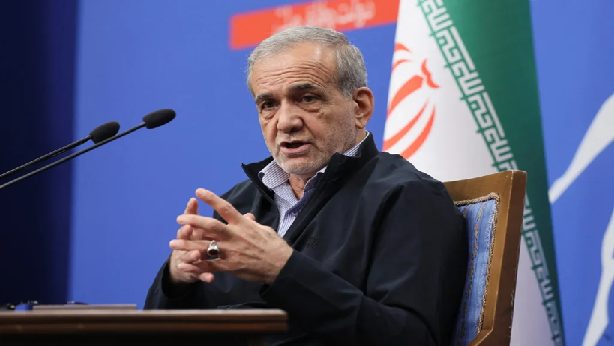
As of February 2026, the geopolitical landscape between Tehran and Washington has entered a precarious new phase of strategic signaling and tentative diplomatic re-engagement. Following the volatile "12-Day War" of June 2025 and subsequent Israeli-US strikes on Iranian nuclear facilities, the administration of President Masoud Pezeshkian is executing a calculated pivot. Facing a crippling currency crisis and renewed domestic unrest, Pezeshkian has explicitly ordered Foreign Minister Abbas Araghchi to pursue "fair and equitable negotiations" with the United States—a move that seeks to secure urgent sanctions relief while navigating the red lines of Iran’s powerful hardline factions.
This diplomatic overture coincides with a massive projection of US military power. The Trump administration has deployed a "massive armada," led by the USS Abraham Lincoln carrier strike group, to the Persian Gulf. This "gunboat diplomacy" creates a high-pressure backdrop for potential talks in Istanbul, mediated by regional powers like Turkey and Qatar who are desperate to avert a wider regional conflagration.
Defining "Fair and Reciprocal" Dialogue
The core of Pezeshkian’s diplomatic strategy relies on a redefinition of engagement terms. Unlike the unconditional resistance advocated by some hardliners, the administration has framed negotiations as a tool for national interest, provided they meet specific criteria:
- Removal of Coercive Threats: Pezeshkian has stated that a "suitable environment" must be free from military threats. This directly challenges the current US strategy of negotiating under the shadow of a naval buildup.
- Reciprocity in Concessions: Tehran is demanding "tangible and verifiable" sanctions lifting in exchange for nuclear caps, rejecting US demands that extend to its missile program or regional proxy support.
- Dignity and Prudence: The administration emphasizes "dignity" (hefz-e aberu) to reassure domestic audiences that engagement does not equal capitulation.
The "Dual-Track" Signaling Strategy
While diplomats prepare for potential talks, Tehran is engaging in aggressive strategic signaling to maximize leverage. This dual-track approach involves simultaneous diplomatic olive branches and military posturing:
| Actor | Action/Signal | Strategic Intent |
|---|---|---|
| Pezeshkian Administration | Ordering "fair" talks; engaging mediators (Turkey, Qatar). | Signal readiness for a deal to solve the economic crisis; isolate the US diplomatically if talks fail. |
| IRGC / Military | Drone "probing" of US vessels; "psychological warfare" rhetoric. | Demonstrate that US pressure will not force total surrender; maintain deterrence credibility. |
| US Administration | Deployment of "massive armada"; strict deadlines. | "Maximum pressure" to force broad concessions on nuclear and missile files. |
Nuclear Leverage: The Post-2025 Landscape
The status of Iran’s nuclear program remains the central bargaining chip. Following the June 2025 strikes, which the US claimed "obliterated" key sites, intelligence reports from early 2026 indicate a complex reality:
- Rebuilding and Fortification: Satellite imagery from January 2026 reveals new construction and roofing at the Esfahan Nuclear Complex, suggesting Iran is rapidly repairing damaged infrastructure.
- Enrichment Levels: Despite the attacks, Iran continues to hold stockpiles of uranium enriched to 60% purity—a short technical step from weapons-grade.
- IAEA Blind Spots: By barring inspectors and limiting IAEA oversight, Tehran has created "strategic ambiguity." This forces the international community to guess its true capabilities, incentivizing a return to the negotiating table to restore visibility.
"This cannot go on forever… at some point I will have to say, ‘I don’t have any idea where this material is.’"
— Rafael Grossi, IAEA Director General, warning of the dangerous lack of oversight in Jan 2026.
The Economic Imperative for Engagement
Domestic economic pressure is the primary driver behind Pezeshkian’s gamble. The Iranian economy is facing a "perfect storm" of sanctions, mismanagement, and external shocks:
- Currency Collapse: The Iranian Rial has plummeted to historic lows, trading at approximately 1.6 million rials to the US dollar as of early February 2026.
- Hyperinflation: Annual inflation officially hovers above 40%, but food and staple prices have seen point-to-point increases exceeding 60-70%.
- Austerity Measures: The removal of preferential exchange rates for essential goods has triggered price shocks, fueling sporadic protests that threaten regime stability.
For the Pezeshkian administration, sanctions relief is not just a diplomatic goal but an existential necessity to stabilize the currency and quell domestic unrest. This economic vulnerability gives the US leverage, but also increases the risk that Tehran might lash out if cornered.
Regional Geopolitics and Mediation
The fear of a repeat of the "12-Day War" has galvanized regional actors. Turkey has emerged as a key mediator, hosting preliminary talks in Istanbul. Ankara, along with Qatar and Oman, is pushing for a compartmentalized approach: secure a nuclear freeze in exchange for specific sanctions waivers, while shelving the more contentious missile and proxy issues for later. This "step-by-step" diplomatic track faces steep hurdles but remains the only viable off-ramp from a direct military collision.
In-Depth Q&A
Q: What does Pezeshkian mean by ‘fair and reciprocal’ dialogue?
President Pezeshkian defines ‘fair’ dialogue as negotiations conducted in an environment free from military threats and coercion. ‘Reciprocal’ implies that any Iranian concessions on its nuclear program must be met with simultaneous, verifiable, and significant lifting of US economic sanctions.
Q: How has the June 2025 ’12-Day War’ impacted current negotiations?
The conflict damaged Iranian nuclear sites but failed to destroy the program’s knowledge base. It hardened Iranian resolve to rebuild (as seen in Esfahan) and use nuclear ambiguity as leverage, while also making regional neighbors like Turkey and Qatar more desperate to mediate a lasting solution to prevent further war.
Q: What is the current status of Iran’s nuclear enrichment as of Feb 2026?
Iran continues to enrich uranium up to 60% purity, which is near weapons-grade. Despite US strikes in 2025, Iran is repairing facilities and restricting IAEA inspections, creating a ‘blind spot’ that pressures the West to negotiate to restore oversight.
Q: Why is the Iranian Rial collapsing in early 2026?
The Rial has hit historic lows (~1.6 million to the USD) due to the cumulative effect of ‘maximum pressure’ sanctions, high inflation (>40%), and a loss of public confidence following the government’s removal of preferential exchange rates for essential imports.
Q: What role are regional countries playing in the US-Iran tension?
Countries like Turkey, Qatar, and Oman are actively acting as intermediaries. Turkey is hosting indirect talks in Istanbul, aiming to facilitate a de-escalation deal that addresses US nuclear concerns and Iran’s economic needs without triggering a wider regional war.