Executive Insights
- Milano Cortina 2026 is the first Winter Olympics officially hosted by two cities, utilizing a decentralized ‘multi-hub’ venue model.
- Ski Mountaineering (‘Skimo’) will debut as a new Olympic sport.
- Travel between Milan and mountain clusters like Cortina and Livigno requires careful planning due to distance and lack of direct train lines.
- Sustainability is a core focus, with 93% of venues being existing or temporary structures, though the new Cortina Sliding Centre remains controversial.
- Tickets are fully digital and sold only through the official Olympic platform.
The 2026 Winter Olympics, officially known as Milano Cortina 2026, will mark a historic shift in Olympic hosting. Scheduled from February 6 to February 22, 2026, these Games will be the first to be officially hosted by two separate cities—Milan and Cortina d’Ampezzo—spanning a vast area of Northern Italy. This decentralized “multi-hub” model is designed to maximize the use of existing venues, reducing the environmental impact and cost of construction.
For fans, athletes, and travelers, this edition promises a unique blend of metropolitan culture and alpine tradition. From the fashion capital of Milan to the UNESCO World Heritage peaks of the Dolomites, here is everything you need to know about the XXV Olympic Winter Games.
Key Dates and Host Cities
The event will take place across approximately 22,000 square kilometers. While the opening and closing ceremonies will be held in historic venues, the sporting action is distributed across four main clusters.
- Dates: February 6 – 22, 2026
- Opening Ceremony: San Siro Stadium (Milan)
- Closing Ceremony: Arena di Verona (Verona)
- Paralympics: March 6 – 15, 2026
Venue Clusters and Sports
Unlike previous compact Games, Milano Cortina 2026 requires strategic travel planning. The events are grouped into four major geographical zones.
| Cluster | Key Venues | Sports Hosted |
|---|---|---|
| Milan | San Siro Stadium, PalaItalia Santa Giulia, Forum di Assago | Opening Ceremony, Ice Hockey, Figure Skating, Short Track Speed Skating |
| Cortina d’Ampezzo | Olimpia delle Tofane, Cortina Sliding Centre, Olympic Ice Stadium | Alpine Skiing (Women), Bobsleigh, Luge, Skeleton, Curling |
| Valtellina | Stelvio Slope (Bormio), Mottolino/Carosello 3000 (Livigno) | Alpine Skiing (Men), Ski Mountaineering, Freestyle Skiing, Snowboarding |
| Val di Fiemme | Predazzo Ski Jumping Stadium, Tesero Cross-Country Centre | Ski Jumping, Nordic Combined, Cross-Country Skiing |
| Anterselva | Südtirol Arena | Biathlon |
New Sport Debut: Ski Mountaineering
A major highlight of 2026 is the Olympic debut of Ski Mountaineering (often called “Skimo”). This high-intensity sport combines uphill climbing with skins and downhill skiing. Events will include:
- Men’s Sprint
- Women’s Sprint
- Mixed Relay
Races will be held in Bormio, testing athletes’ endurance and technical skiing ability in a format that honors the roots of alpine travel.
Transportation & Travel Logistics
Travel between clusters is a critical consideration for attendees. The distance between Milan and Cortina is significant (approx. 400km), and there is no direct train between the two host cities.
Getting There
- Milan Events: Fly into Milan Malpensa (MXP) or Linate (LIN). High-speed trains connect Milan to major Italian cities.
- Cortina Events: Venice Marco Polo (VCE) is the closest major international airport. From Venice, visitors can take the Cortina Express bus or a combination of train and bus.
Moving Between Clusters
Organizers are implementing a “Train & Ride” system to minimize car usage:
- Milan to Cortina: Take a train to Venice Mestre or Ponte nelle Alpi, followed by a dedicated Olympic bus transfer. Allow 5+ hours for this journey.
- Milan to Valtellina (Bormio/Livigno): Take the train from Milan to Tirano, then transfer to a shuttle. Access to Livigno may require passing through Switzerland or specific mountain passes.
- Restricted Traffic Zones (ZTL): Mountain venues will have strict traffic restrictions. Spectators are strongly advised to use the official transport network rather than rental cars.
Mascots and Brand Identity
The official mascots are Tina and Milo, two stoats (weasels) named after the host cities (Tina for Cortina, Milo for Milano). They were designed by students and selected via a public vote.
- Tina (Creative): Represents art, music, and the transformative power of beauty.
- Milo (Resilient): Born without a leg, he represents ingenuity and uses his tail to overcome obstacles.
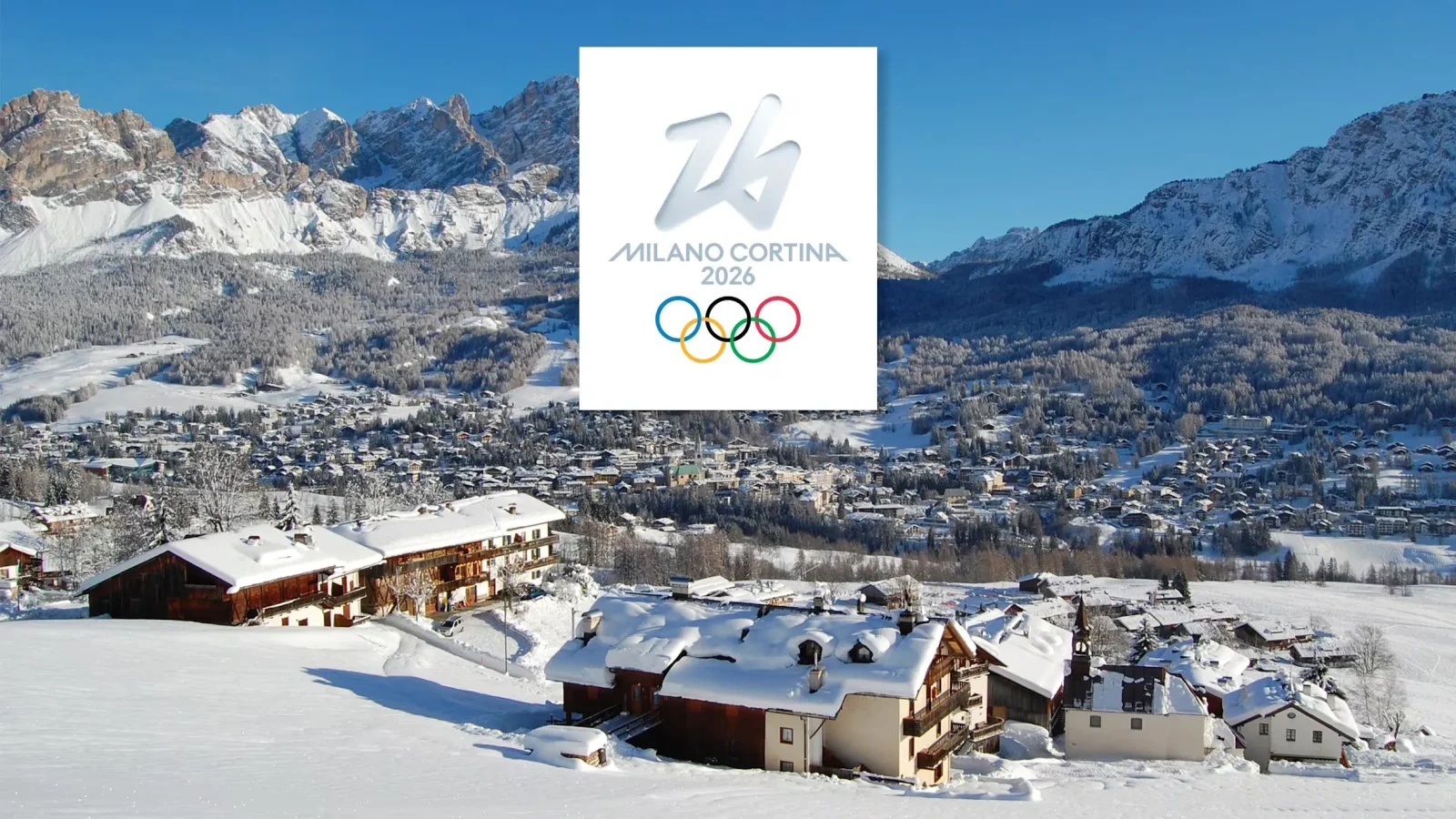
The emblem, “Futura,” is a single white line tracing the number 26, symbolizing sustainability and the legacy of the Games.
Sustainability & Challenges
Milano Cortina 2026 aims to be the most sustainable Winter Games ever, with 93% of venues being existing or temporary. However, the event has faced significant challenges:
- Cortina Sliding Centre: Originally, organizers planned to use a track in Austria or Switzerland to save money. However, the Italian government decided to rebuild the historic Eugenio Monti track in Cortina. This project has drawn criticism for its high cost (over €80 million), environmental impact (deforestation), and tight construction timeline.
- Climate Resilience: With rising global temperatures, snow reliability is a concern. The Games will rely heavily on advanced artificial snowmaking, particularly for lower-altitude venues.
- Construction Delays: Infrastructure projects, including the sliding track and the Cortina cable car, are racing against the clock, with some labor unions and anti-mafia groups monitoring contracts closely.
Tickets and Fan Experience
Tickets are sold exclusively through the official digital platform, tickets.milanocortina2026.org. There are no paper tickets. Key details include:
- Pricing: Prices vary widely, from affordable access for preliminary rounds to premium pricing for finals and ceremonies.
- Resale: An official resale platform is expected to launch in late 2025 to prevent scalping and ensure secure transfers.
- Fan ID: Attendees will likely need to register their details in the official app for venue access, integrated with local transport passes.
In-Depth Q&A
Q: Where are the 2026 Winter Olympics being held?
The 2026 Winter Olympics will be jointly hosted by Milan and Cortina d’Ampezzo, Italy. Events will be spread across four main clusters: Milan, Cortina, Valtellina (Bormio/Livigno), and Val di Fiemme.
Q: What are the dates for the 2026 Winter Olympics?
The Games are scheduled to take place from February 6 to February 22, 2026.
Q: What new sports are in the 2026 Winter Olympics?
Ski Mountaineering, also known as ‘Skimo,’ will make its Olympic debut with men’s sprint, women’s sprint, and mixed relay events.
Q: How do I get from Milan to Cortina for the Olympics?
There is no direct train. Travelers should take a high-speed train to Venice or Ponte nelle Alpi, then connect via the official Olympic bus shuttles. The journey takes approximately 5 hours.
Q: Where can I buy tickets for Milano Cortina 2026?
Tickets are available exclusively through the official website: tickets.milanocortina2026.org. All tickets are digital.
Q: What is the controversy with the Cortina bobsleigh track?
Critics argued the track should not be rebuilt due to high costs and environmental damage. The Italian government proceeded with the rebuild despite initial plans to use an existing track in a neighboring country.